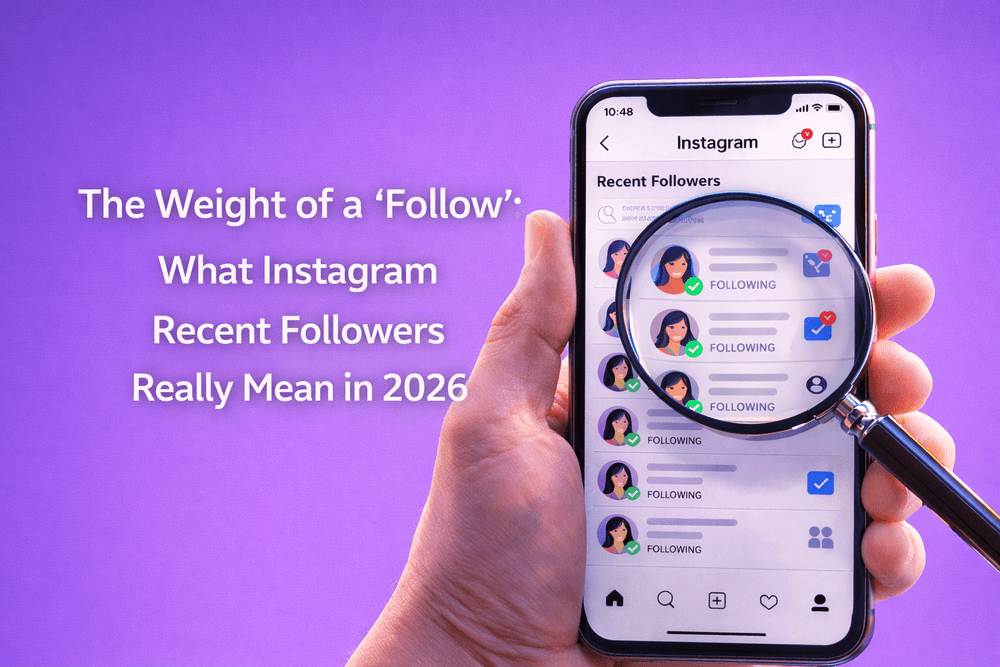
In 2026, an Instagram “follow” is no longer a casual tap. It has become a social signal, a trust indicator, and in many cases, a data point interpreted by algorithms rather than people.
As conversations around instagram recent followers and recent following behavior continue to grow, it’s clear that users are no longer just asking who followed whom. They’re asking why it matters, what it signals, and how platforms interpret it.
From our perspective as observers of Instagram behavior and follower dynamics, the meaning of a “recent follow” has quietly but fundamentally changed.
Instagram Recent Followers: From Visibility to Signal
Historically, Instagram displayed followers in near-chronological order. Users could easily see who someone recently followed on Instagram, and patterns were obvious.
That transparency faded over time.
Today, Instagram no longer provides a clear, native way to:
- see who someone recently followed on Instagram
- view recent followers in a strict chronological list
- identify the most recent following activity on another account
This shift wasn’t accidental.
Instagram’s algorithmic evolution reflects a deeper trend: recent follows are no longer just user-facing information — they are algorithm-facing signals.
Why Instagram Hides Recent Following Activity
From a platform design perspective, hiding recent following reduces:
- social comparison pressure
- interpersonal conflict
- manual follower surveillance
But from a system perspective, it does something more important:
It allows Instagram to privately interpret follow behavior without external noise.
Recent follows now feed into:
- interest modeling
- relationship weighting
- content ranking signals
In other words, you may not see recent followers clearly — but the algorithm does.
The New Meaning of “Recent Followers” in 2026
Based on behavioral data patterns and platform changes, recent follows now represent three things simultaneously:
1. Intent, Not Popularity
A recent follow often reflects short-term intent, not long-term loyalty.
Algorithms weigh when and how a follow happens more than raw follower count.
2. Relationship Proximity
Who you recently follow — and who recently follows you — helps Instagram infer:
- social closeness
- shared networks
- relevance strength
3. Trust Signals
In a landscape flooded with fake growth, recent, organic follows act as cleaner trust signals than total follower numbers.
This is why users increasingly search for:
- instagram recent following
- view recent followers instagram
- how to see most recent followers on instagram
They’re not being curious — they’re trying to decode meaning.
Why Users Still Want to See Recent Followers
Despite reduced visibility, interest in recent follows hasn’t dropped. It has intensified.
People want to:
- understand sudden engagement changes
- interpret unfollows or follow bursts
- analyze creator or brand momentum
- validate authenticity
For creators and brands, recent followers often reveal more than total growth:
- Did this post attract the right audience?
- Did a campaign bring real interest or passive clicks?
- Are new followers aligned with content direction?
Manual Guessing vs. Analytical Observation
Without native tools, many users resort to:
- screenshots
- memory-based comparison
- manual scrolling
This approach is fragile and misleading.
As Instagram grows, manual tracking of recent followers becomes structurally unreliable. Lists reorder. Visibility fluctuates. Data disappears.
This is why analytical approaches have quietly replaced guessing.
Reading Recent Follows as a System, Not a List
Modern follower analysis isn’t about spying on individuals.
It’s about reading patterns.
Some platforms focus on analyzing recent follow dynamics rather than exposing private data. Instead of promising full visibility, they surface:
- changes in recent followers over time
- consistency of follow behavior
- follow-back asymmetry
- shifts in audience quality
From an industry perspective, this is a healthier direction.
Tools like RecentlyFolowed were built around this idea:
observe patterns, not people.
Rather than asking “who exactly did they follow?”, the more valuable question is: “What does their recent follow behavior tell us about trust, interest, or momentum?”
Recent Following and Algorithmic Weight
One overlooked aspect of instagram recent followers is how strongly timing influences algorithmic interpretation.
A recent follow can:
- boost early distribution for new content
- reinforce topical relevance
- strengthen relationship signals
This is why creators sometimes notice:
- higher reach shortly after follow spikes
- engagement shifts without content changes
Recent follows act like fresh signals, and freshness matters more than volume in modern ranking systems.
What This Means for Creators and Brands
In 2026, optimizing for follower count alone is outdated.
Instead, focus on:
- attracting relevant recent followers
- maintaining consistent follow velocity
- avoiding artificial spikes
- monitoring follow/unfollow patterns
Understanding recent followers as signals, not trophies, leads to better strategic decisions.
A Final Thought on Visibility and Trust
Instagram may no longer show recent followers clearly — but that doesn’t mean they’ve lost importance.
Quite the opposite.
As visibility decreases, signal value increases.
Those who understand recent following behavior gain an edge not by watching others, but by reading the system beneath the surface.
In the AI-driven social era, the real question is no longer who followed whom —but what that follow means.
FAQ
1: Can you see who someone recently followed on Instagram?
No.
Instagram does not currently offer an official way to view who an account recently followed in chronological order, nor does it provide a true list of recent followers. The follower and following lists are dynamically sorted and do not represent a real-time timeline.
2: Why have “recent followers” become more important on Instagram?
Because in the 2026 Instagram ecosystem, recent actions carry more signal value than historical totals.
Recent followers often reflect current interests, short-term relationships, and immediate trust—signals that are more useful for algorithmic ranking and content distribution than for simple public display.
3: Does Instagram’s algorithm actually analyze recent following behavior?
Yes. While Instagram does not publicly disclose its exact mechanisms, platform evolution and content distribution patterns strongly suggest that recent following activity is used as a behavioral signal to evaluate interest shifts, relationship strength, and content relevance.
4: Is manually checking recent followers a reliable method?
Not really.
Because follower lists are not strictly time-based and visibility changes dynamically, relying on screenshots, memory, or repeated refreshing often leads to inaccurate conclusions—especially as accounts grow.
5: If you can’t see exactly who followed whom, what’s the value of recent followers?
The real value lies in patterns, not individuals.
By observing trends, timing, and consistency in recent followers, it becomes possible to assess audience alignment, content resonance, and the overall health of account growth. This shift explains why the industry is moving away from tracking individual actions and toward interpreting system-level signals.